
By Townhall Chicago News Staff
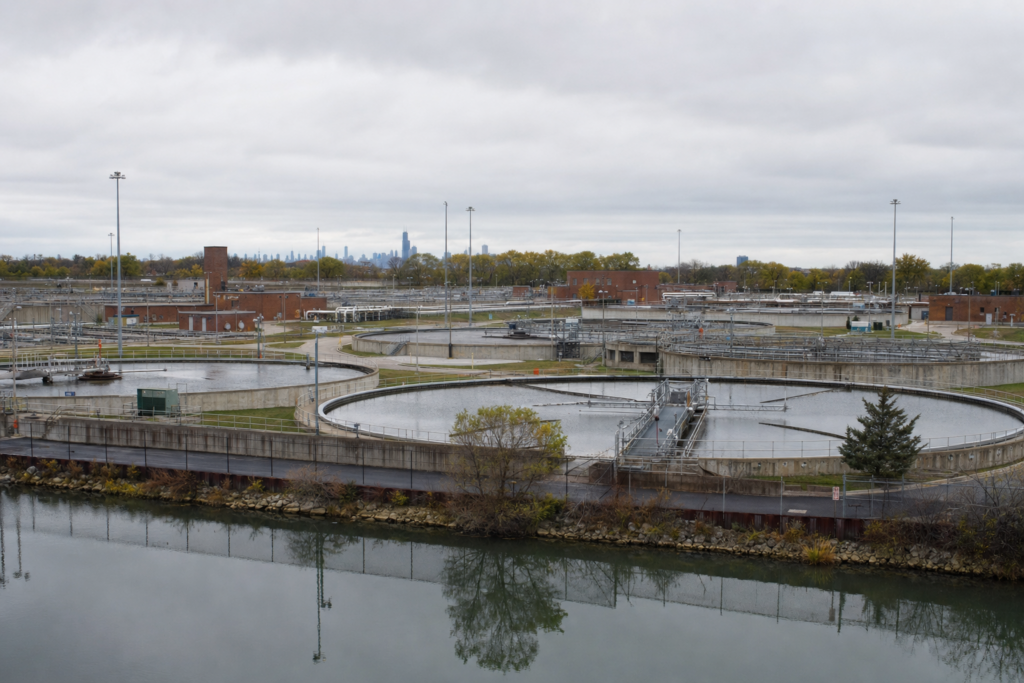
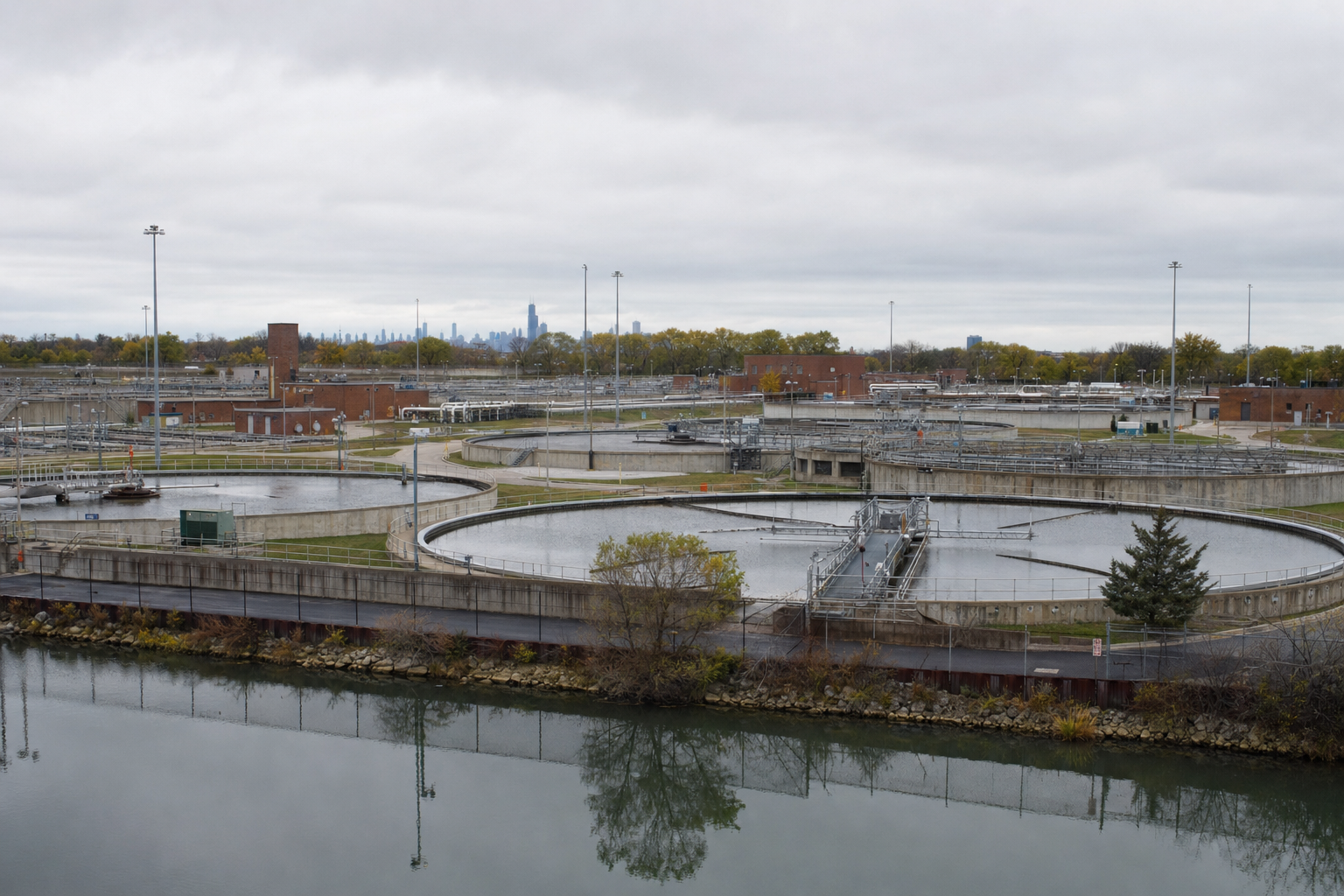
The Metropolitan Water Reclamation District of Greater Chicago has begun work on a nearly $400 million project at its O’Brien Water Reclamation Plant in Skokie to reduce phosphorus discharges into area waterways.
The four-year project, known as Battery E, represents one of the largest single investments in the district’s 137-year history. It will add new aeration tanks, final settling tanks, supporting structures and equipment on the southwest side of the plant at 3500 Howard St., according to district officials.
“We are all tied together by water,” MWRD President Kari K. Steele said at an Oct. 8 groundbreaking ceremony. “The water that flows down our drains eventually comes here or to one of our other six water reclamation plants before it is cleaned and then sent downstream.”
The O’Brien plant treats wastewater from Evanston and surrounding communities before returning it to the North Shore Channel. Excess phosphorus from sources such as fertilizers, urban runoff and drinking water treatment enters the wastewater stream and can trigger harmful algae growth and oxygen depletion in waterways.
The problem extends far beyond the Chicago region. Phosphorus carried by Chicago-area waters flows through the North Branch of the Chicago River and the Des Plaines River before eventually reaching the Mississippi River and the Gulf of Mexico. Excess nutrients are considered a major contributor to one of the world’s largest aquatic dead zones in the Gulf, an oxygen-depleted area roughly the size of New Jersey.
Battery E will help the O’Brien plant meet new phosphorus discharge limits set to take effect by 2030. The U.S. Environmental Protection Agency and a federal task force are pursuing a 45 percent reduction in nitrogen and phosphorus entering the Mississippi River basin by 2035. The MWRD estimates that the nutrient-removal technologies it is deploying at its three largest facilities, including O’Brien, will achieve 20 percent of Illinois’s share of that reduction goal.
“Phosphorus is essential to life, but too much phosphorus can fuel excessive algae growth, reduce oxygen levels and harm aquatic ecosystems,” Steele said. “By adding a new battery, we are creating the capacity and flexibility to modernize this facility and extend its ability to serve the region for another century.”
Evanston Mayor Daniel Biss, who spoke at the groundbreaking, called the project a critical investment. “We are operating in a changing environment, an environment where pollutants and contaminants have entered the water,” Biss said. “We are here today to celebrate the fact that the Metropolitan Water Reclamation District is rising to meet that challenge.”
Skokie Mayor Ann Tennes also attended the ceremony.
Commissioner Cameron Davis, an Evanston resident who coordinated the Great Lakes Restoration Initiative under the Obama administration, said the project goes beyond infrastructure. “This isn’t just some big piece of equipment,” Davis said in a statement after the ceremony. “It’s a big investment in the health of our waterways, jobs and helping our downstream neighbors.”
Sewage effluent accounts for an estimated 48 percent of the phosphorus and 16 percent of the nitrogen in Illinois rivers, according to studies cited by the Sierra Club Illinois Chapter. Runoff from soils treated with fertilizers and manure accounts for an equal share of the phosphorus.
The MWRD Board of Commissioners also adopted a 2026-2030 Strategic Plan this month to guide the agency through the end of the decade with goals aimed at long-term protection of the region’s water environment.
The Battery E project is expected to be completed around 2030.