By Townhall Chicago News Staff
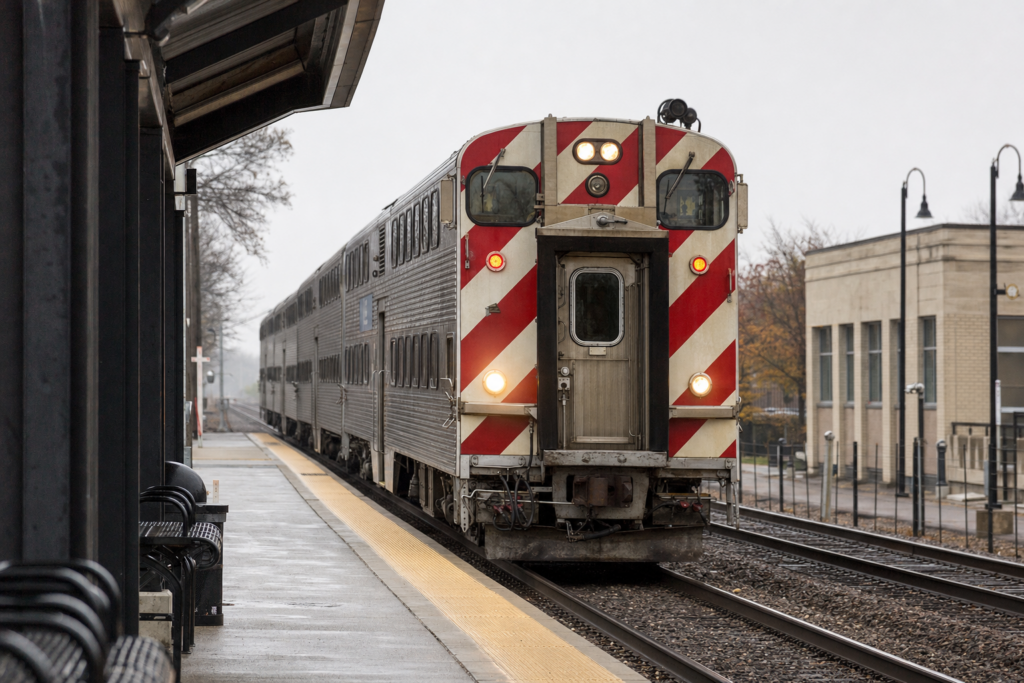
Metra released a draft study outlining the infrastructure improvements and estimated costs needed to provide more frequent, all-day service across its 11-line commuter rail network, a goal shared by the agency’s strategic plan and the new Northern Illinois Transit Authority.
The Systemwide Network Plan identifies what it would take to transition from Metra’s traditional rush-hour-focused commuter service to a regional rail model with trains running throughout the day in both directions. The plan will be the subject of public outreach this fall, including a virtual public hearing in November, according to the agency.
“This plan lays out near- and mid-term implementation steps to support the evolution of our service, but it also defines a long-term vision for what regional rail can become,” Metra Executive Director and CEO Jim Derwinski said in a statement. “We hope it will serve as a blueprint to support the transition and success of NITA in a regionally coordinated effort to implement regional rail.”
The plan outlines two levels of service improvement. Regional Rail 1.0 would bring trains every 30 to 60 minutes across the system, requiring an estimated $2.7 billion in capital investment and $269 million in additional annual operating costs, according to the plan. Regional Rail 2.0 would increase frequency to every 15 to 30 minutes, requiring an additional $6.4 billion in capital investment and $411 million in annual operating costs.
The total price tag for the full vision is approximately $9.1 billion, roughly 18 times the $500 million Metra budgeted this year for infrastructure and trains, according to a Chicago Sun-Times report on the plan.
Each rail line presents different challenges involving infrastructure, freight traffic and ridership patterns, making a single approach impractical, the agency said. On some lines, existing service patterns could be maintained with more frequent trains. Others could benefit from dividing routes into inner and outer zones, with inner-zone trains turning back before the end of the line and outer-zone trains running express closer to downtown.
The plan also identifies crosstown service as a priority. O’Hare Airport “emerged as a major trip generator in each of the future scenarios” the agency studied, according to the plan. The North Central Service line was selected for crosstown service that would connect the south suburbs to O’Hare through downtown.
Achieving that goal would require an estimated $610 million to improve Union Station for through-running train service, allowing passengers to travel, for example, from Aurora on the BNSF line through downtown to O’Hare without changing trains, according to the plan.
“Metra’s Systemwide Network Plan represents an opportunity to put years of work and rider engagement into action and improve transit connections across the region,” NITA interim Executive Director Jamie Rhee said in a statement. “We know that riders want to move more easily from city to city across the suburbs and collar counties in addition to more frequent service downtown.”
Metra has already taken steps toward regional rail, including simplifying schedules, shortening off-peak headways and improving reverse-commute service. Schedules that incorporate more regional rail elements have generally experienced stronger ridership recovery, according to the agency.
The NITA Act requires Metra to implement a regional rail pilot on the Rock Island Line by January 2027. The plan can be viewed and commented on at metra.com/SNP.