By Townhall Chicago News Staff
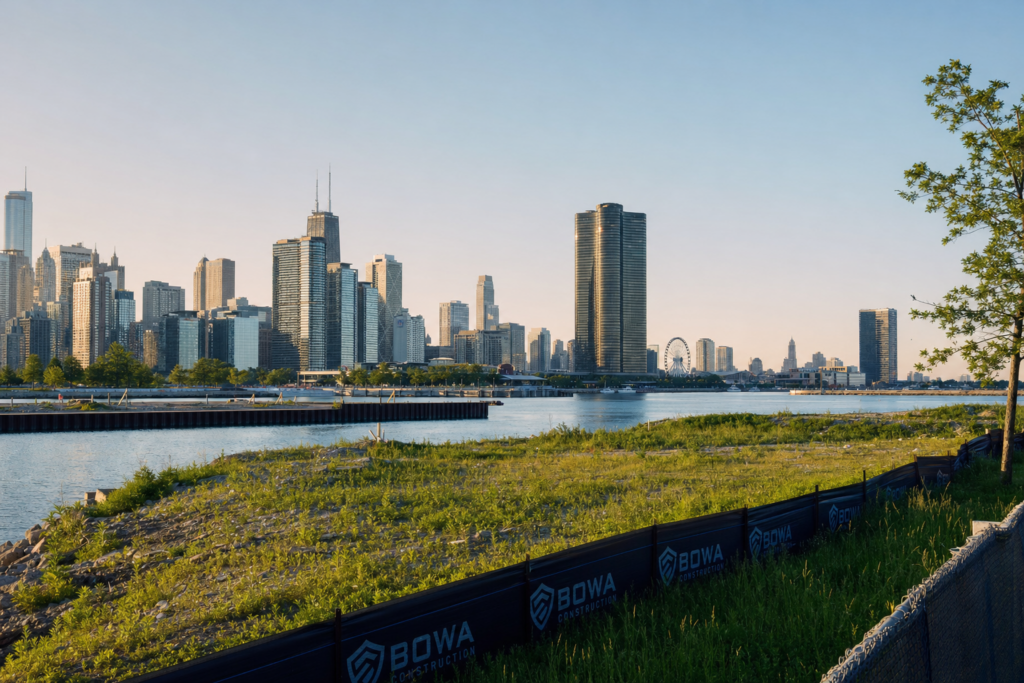
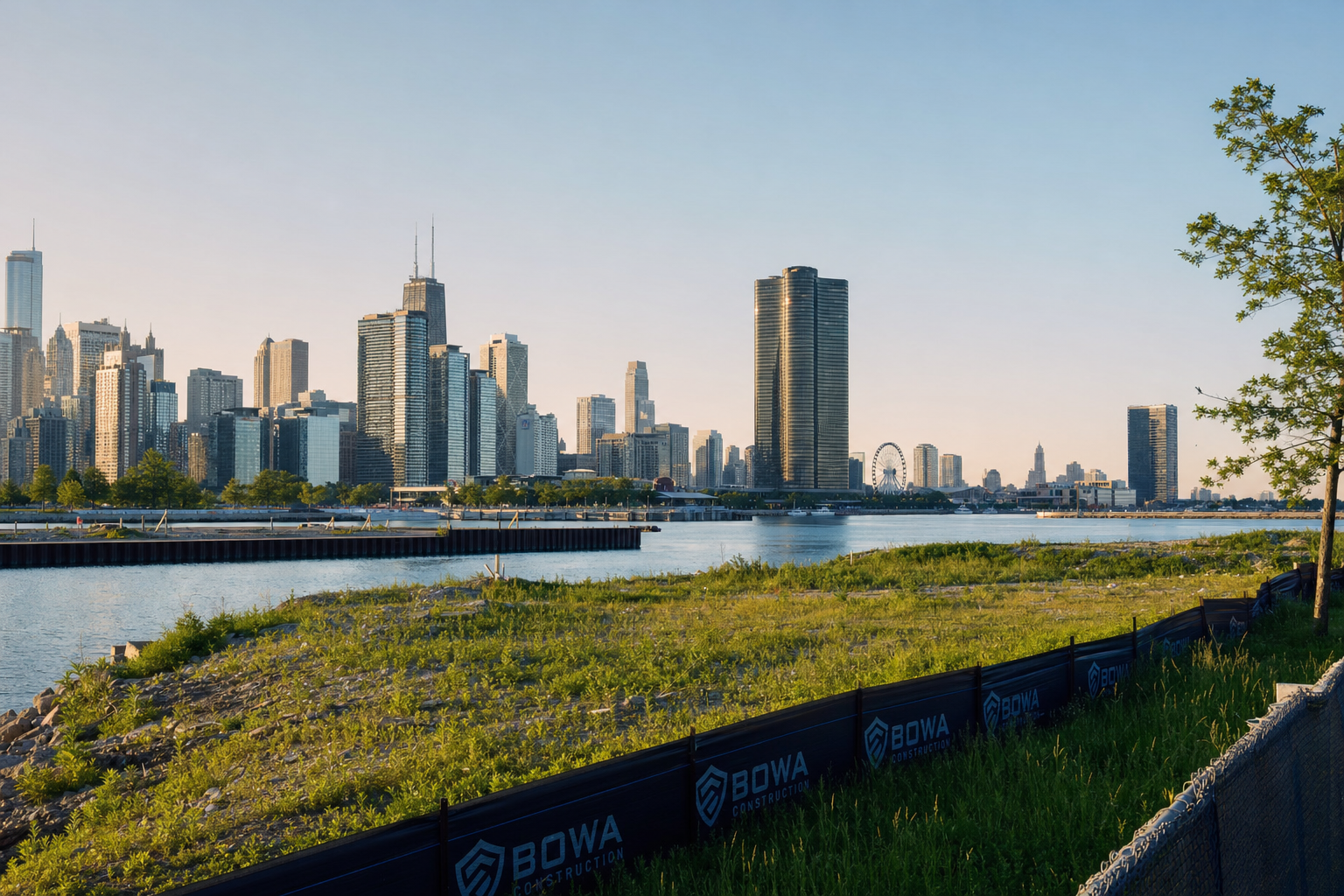
Mayor Brandon Johnson and the Chicago Park District broke ground Monday on DuSable Park, a 3.44-acre green space at the confluence of the Chicago River and Lake Michigan that will honor the city’s first permanent non-Indigenous settler, Jean Baptiste Point DuSable.
The ceremony marks the start of construction on a park decades in the making, transforming the last undeveloped parcel along the downtown lakefront into a public gathering space with walking trails, public art and designed landscapes.
“DuSable Park honors the Potawatomi, Ottawa, and Chippewa tribes whose trade routes helped shape this region, and the legacy of Jean Baptiste Point du Sable and his wife, Kitihawa, whose trading post helped lay the foundation for the city we all call home,” Johnson said in a news release. “DuSable Park will give families, residents and visitors a new green space in which to gather, connect with nature, and make memories for years to come.”
The site at 451 N. Lake Shore Drive was first dedicated as DuSable Park by Mayor Harold Washington in 1987 and turned over to the Park District the following year. It remained undeveloped for nearly four decades. In 2021, the Park District completed an environmental remediation project at the site with funding support from the Environmental Protection Administration.
The park was made possible through a public-private partnership. Related Midwest committed $10 million, covering the bulk of estimated construction costs, according to the mayor’s office. Ald. Brendan Reilly (42nd) secured a $5 million City of Chicago Open Space Impact Fee grant. Additional support includes a $400,000 Illinois Department of Commerce and Economic Opportunity grant from Illinois State Sen. Mattie Hunter (3rd District) and $100,000 from the Chicago Park District.
“This park is the product of years of collaboration that has taken the dedication, persistence, and partnership of countless individuals and organizations to bring us to this historic moment,” Chicago Park District Superintendent and CEO Carlos Ramirez-Rosa said in the release.
Key design elements include an open lawn, a pavilion, a woodland area, a wet prairie, plazas, a boardwalk and an overlook. The design was shaped by stakeholders and guided by the 2006 DuSable Park Framework Plan, according to the city.
A centerpiece of the park will be a newly commissioned sculpture honoring DuSable, who established a thriving trading post near modern-day Pioneer Court on Michigan Avenue in the late 18th century. Sculptor Branly Cadet and architect Rodney Leon, both American-born artists of Haitian descent, will design the statue, which will be the first full-body sculpture of DuSable.
Additional public art installations highlighting Indigenous voices will be supported by a $500,000 donation from the Mellon Foundation, developed in coordination with the city’s Department of Cultural Affairs and Special Events as part of the Chicago Monuments Project.
Related Midwest will also develop “Founders Way,” a planned extension of the Chicago Riverwalk that will provide pedestrian access to the park.
“Chicago has always been a city that turns bold ideas into reality, and DuSable Park is the latest example of that pioneering spirit,” Don Biernacki, executive vice president of Related Midwest and president of LR Contracting, said in the release.
“DuSable Park will finally honor Mayor Harold Washington’s promise to celebrate Chicago’s original non-native settler while giving Chicago residents and visitors even greater access to the Lakefront,” Ald. Brendan Reilly said in the release.
The park is designed by Carol Ross Barney Architects and Westbrook Architects. Construction is slated for completion in the summer of 2028.