By Townhall Chicago News Staff
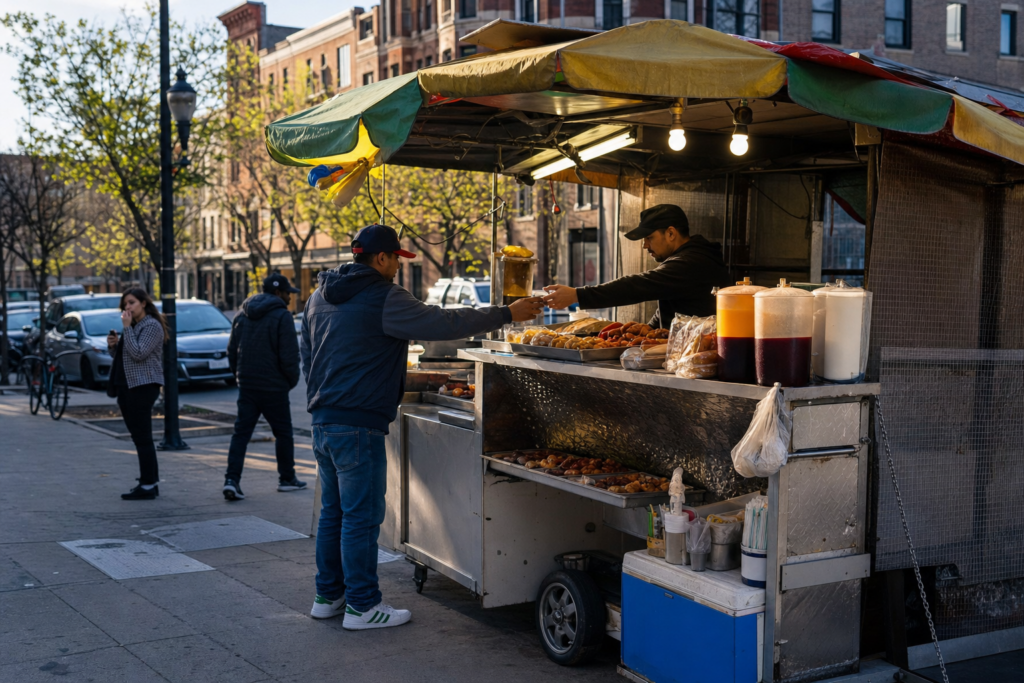
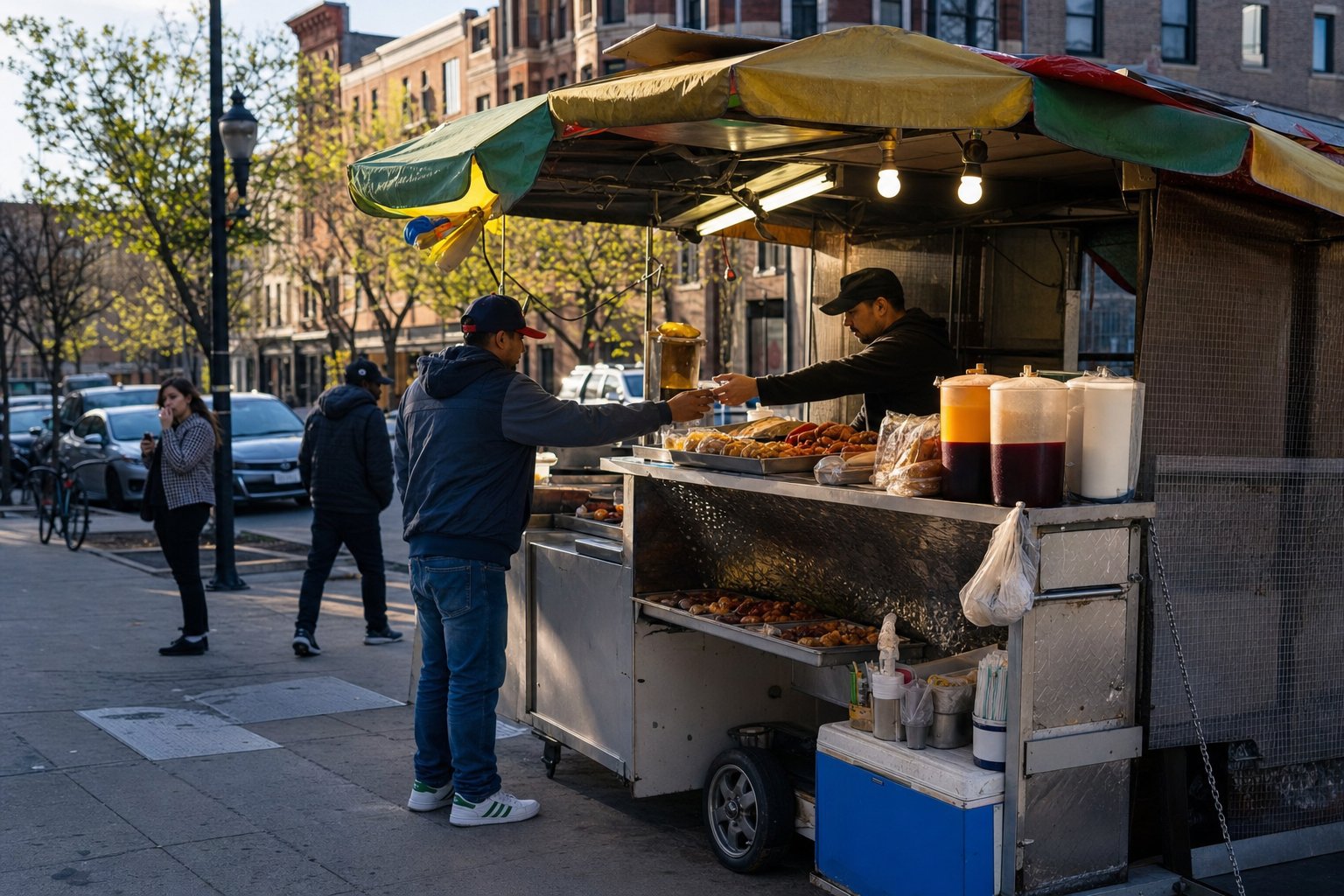
Mayor Brandon Johnson on Wednesday joined the Street Vendors Association of Chicago to publicly endorse a proposed ordinance that would legalize mobile food carts and allow vendors to sell prepared foods on city sidewalks for the first time.
The measure, introduced as part of Johnson’s fiscal year 2027 Fair Share Budget, could reshape Chicago’s street food landscape and create a regulated path forward for hundreds of informal vendors, many in immigrant communities, who currently operate without a legal framework.
“Street food vendors embody the soul of Chicago and tell the stories of the communities who call our city home,” Johnson said at the rally, according to a Nov. 4 news release from the mayor’s office. “For too long, City government failed to provide these entrepreneurs with the clear guidance and support they need to build sustainable businesses and provide for their families. This ordinance changes that.”
Chicago does not currently offer a license for entrepreneurs to sell prepared foods from a mobile cart on public sidewalks, making it the only major U.S. city without such a provision, according to the release.
Under the proposed ordinance, vendors would be able to apply for a license to sell hot and cold food and beverages that require preparation, holding or topping. The license would cost $500 for a two-year term.
Applicants would need to obtain a Food Service Sanitation Certificate, complete a health consultation with the Chicago Department of Public Health and submit their menu for approval. Carts would need to include an integrated handwashing station and equipment to maintain safe food temperatures.
“Thirty years ago, street vendors started organizing for the opportunity to sell freshly prepared food on the street in Chicago,” Juan J. Gama, president of the Street Vendors Association of Chicago, said in the release. “After years of knocking doors, Mayor Johnson gave us the opportunity for this dream to come true.”
The rally drew support from Ald. Byron Sigcho-Lopez of the 25th Ward and food equity advocates. Deputy Mayor Beatriz Ponce de León framed the ordinance as a counterpoint to federal immigration enforcement.
“While the federal government works to shut doors on immigrant communities, Chicago is opening them,” Ponce de León said in the release. “This ordinance is about recognizing the contributions vendors already make to our city and giving them a fair shot to grow their businesses.”
The proposal includes operational requirements. Vendors would need to move their carts at least every four hours, maintain clear pedestrian access and stay at least 200 feet from brick-and-mortar restaurants that sell prepared food. The sale of raw meat and alcoholic beverages would be prohibited.
The legislation would also create a Mobile Food Cart Stands Program, allowing the Chicago Department of Transportation to designate permanent sidewalk locations where food carts could operate with the approval of the local alderman, the City Council and the Chicago Police Department.
Deputy Mayor Max Budovitch said the ordinance is part of a broader effort to support neighborhood entrepreneurs.
“By expanding the ways that entrepreneurs can participate in and contribute to our neighborhood economies, we create more opportunities for small businesses to take root and grow,” Budovitch said in the release.
The proposal builds on the city’s existing mobile food rules. A 2015 ordinance authorized the sale of prepackaged food from mobile carts, and separate regulations govern food trucks. The new ordinance requires City Council approval to take effect.