By Salem Chicago News Staff
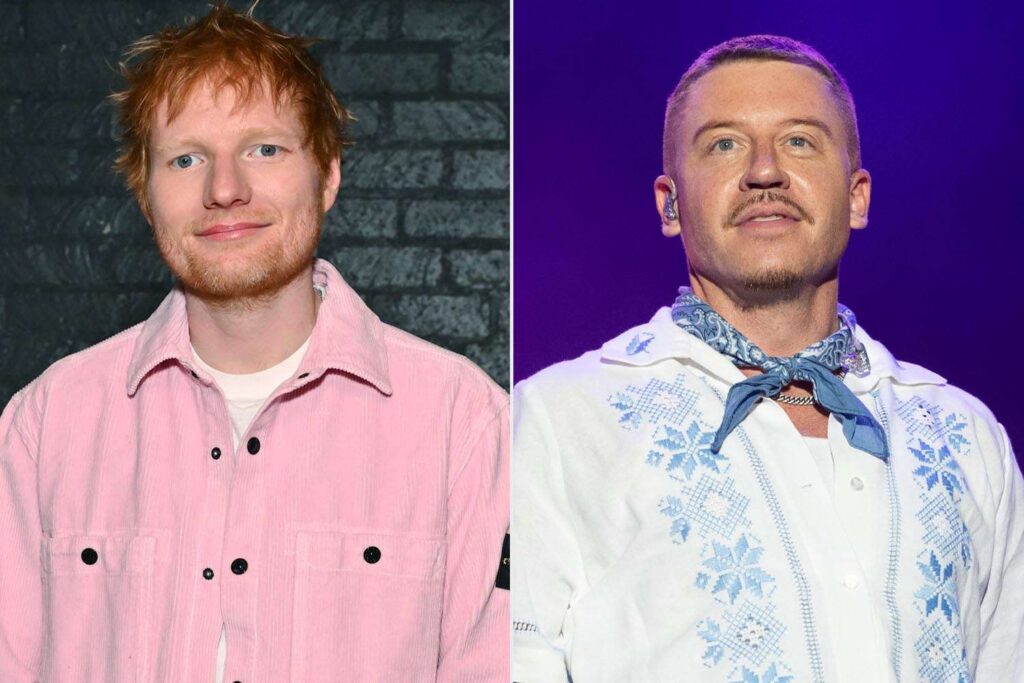
CHICAGO — American concert venues have become an unexpected new front in the public debate over the Israel-Hamas war, with artists facing mounting pressure to affirm or reject the political messaging of their peers from the stage. Rapper Macklemore seized a recent joint tour stop to direct his audience toward pro-Gaza, anti-Israel sentiment, putting his co-headliner in an immediate and very public position. Ed Sheeran, one of the world’s best-selling recording artists, responded by breaking with Macklemore’s framing and publicly acknowledging the horror of the October 7th Hamas attack, while simultaneously calling the situation in Gaza “catastrophic and unjustifiable” — a formulation that drew sharp criticism from conservative commentators who argued it granted Hamas and Israel a false moral equivalence.
Sheeran commands an audience that spans generations and geographies, making his willingness to address one of the most divisive conflicts in modern memory a significant departure from the studied political neutrality that major pop artists typically maintain. His decision to speak at all — rather than simply allowing Macklemore’s statement to stand — signals an artist trying to hold the line for artistic integrity inside an environment where any statement, however carefully constructed, will be claimed by one side or the other.
His most pointed remark concerned the practice of content pre-approval by venues, not the war itself. “I am deeply worried about the idea that venues pre-approved content and performance,” Sheeran says. “This happens in so many places that I perform around the world but it should never happen in the free world.” The statement is a First Amendment argument embedded in a concert — a defense of the principle that politically charged art should not be subject to institutional gatekeeping before it reaches an audience.
Sheeran’s substantive remarks addressed the conflict with language he chose with evident care. “What happened in Israel and at the Nova music festival on October 7th was horrific and compounded centuries of Jewish pain,” he says. “What is happening in Gaza is catastrophic and unjustifiable.” The statement represented a clearer acknowledgment of the October 7th attack than many of his industry peers have been willing to offer. It declined, however, to assign primary moral responsibility for Gaza’s suffering to the organization that started the war.
That omission is precisely what critics found insufficient. The conservative argument against Sheeran’s framing rests on a distinction his statement does not draw: Hamas deliberately targeted a music festival, murdered and kidnapped civilians, and has systematically used the Palestinian civilian population as a military shield throughout the conflict. Placing the word “unjustifiable” alongside the October 7th attack and Israel’s military response to it, critics argue, erases a moral difference that is factually significant and ethically necessary to name. Sheeran is credited with letting the show go on and refusing to cede the stage to Macklemore’s messaging — but his critics maintain the facts of the situation demanded greater moral precision than his statement provided.